
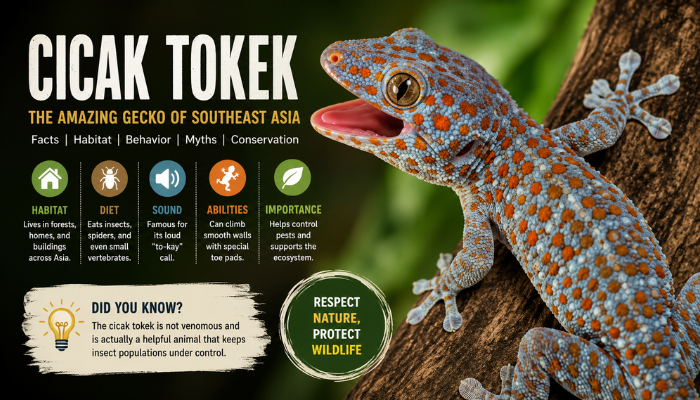
The cicak tokek is one of the most recognizable reptiles in tropical Asia. Famous for its unmistakable “to-kay” vocalization, striking blue-gray skin covered with orange or red spots, and surprisingly large size, this gecko has fascinated homeowners, wildlife enthusiasts, and researchers alike. Whether seen climbing walls at night or heard calling from rooftops, the cicak tokek has become a symbol of mystery in many cultures.
Despite the myths and misconceptions surrounding this remarkable creature, the cicak tokek plays an essential role in maintaining ecological balance. As a natural predator of insects and small pests, it contributes significantly to controlling unwanted populations around homes and forests. In this comprehensive guide, we’ll explore everything you need to know about the cicak tokek, including its physical characteristics, habitat, behavior, cultural significance, conservation status, and frequently asked questions.
What Is a Cicak Tokek? Understanding Its Characteristics and Classification
The cicak tokek (Gekko gecko), commonly known as the Tokay gecko, belongs to the Gekkonidae family. It is one of the largest gecko species in the world, often reaching lengths of 10 to 16 inches (25–40 cm). Unlike the smaller house geckos commonly found indoors, the cicak tokek has a muscular body, large head, powerful jaws, and vibrant coloration that makes it easy to identify.
Its skin usually appears bluish-gray with bright orange or reddish spots distributed across the body. These unique patterns vary between individuals, making every cicak tokek visually distinct. Equipped with specialized toe pads containing millions of microscopic hairs, the gecko can effortlessly climb walls, ceilings, tree trunks, and smooth surfaces without slipping.
One of the most distinctive characteristics of the cicak tokek is its loud vocalization. The repeated “to-kay” sound gives the species its common name. Males are especially vocal during breeding seasons, using their calls to attract females and defend territories against rivals. These calls can travel surprisingly long distances during quiet nights.
The cicak tokek is also known for its exceptional eyesight. Unlike many reptiles, it possesses excellent night vision, allowing it to hunt efficiently in darkness. Combined with acute hearing and strong climbing abilities, these adaptations make it a highly successful nocturnal predator.
Habitat, Distribution, and Daily Lifestyle of the Cicak Tokek
The cicak tokek naturally inhabits tropical and subtropical forests throughout Southeast Asia. It can be found in countries such as Indonesia, Malaysia, Thailand, Vietnam, Cambodia, Myanmar, the Philippines, and parts of southern China. Due to accidental introductions and the exotic pet trade, populations have also established themselves in regions including Florida and several Pacific islands.
Although forests remain its natural environment, the cicak tokek has adapted remarkably well to human settlements. It frequently lives inside houses, warehouses, temples, barns, and abandoned buildings where insects are plentiful. Cracks in walls, roof spaces, and hollow trees provide excellent shelter during daylight hours.
As a nocturnal species, the cicak tokek spends most of the day hiding. Activity begins shortly after sunset when temperatures become cooler. During nighttime, it actively hunts insects, spiders, moths, cockroaches, beetles, crickets, and occasionally small rodents, birds, frogs, or even smaller reptiles.
The species is highly territorial. Adult males defend their chosen areas aggressively, often confronting intruders through loud vocalizations and physical displays. If threatened, a cicak tokek may bite defensively with surprising force. However, it generally avoids confrontation whenever possible and prefers escaping into nearby hiding places.
Diet, Hunting Behavior, and Ecological Importance of the Cicak Tokek
The cicak tokek serves as an efficient natural pest controller. Its diet primarily consists of insects that commonly invade homes and gardens. Cockroaches, mosquitoes, moths, termites, flies, grasshoppers, and beetles are regular food sources, making the gecko beneficial for homeowners seeking natural pest management.
Larger individuals are opportunistic predators capable of consuming small vertebrates. They may prey upon young mice, nestling birds, frogs, snakes, and even smaller geckos when the opportunity arises. Their strong jaws enable them to subdue prey much larger than those hunted by ordinary house geckos.
Hunting usually involves patience rather than speed. The cicak tokek remains motionless while observing prey before launching a rapid attack. Its excellent night vision and sticky toe pads allow it to pursue insects across walls, ceilings, and tree branches with remarkable agility.
Ecologically, the cicak tokek occupies an important place in food webs. While controlling insect populations, it also serves as prey for snakes, owls, large birds, monitor lizards, and mammals. This balance helps maintain healthy ecosystems by regulating both predator and prey populations naturally.
Furthermore, scientists continue studying cicak tokek biology because of its extraordinary adhesive toe pads. Research inspired by gecko feet has contributed to innovations in robotics, medical adhesives, and advanced climbing technologies.
Myths, Cultural Beliefs, and Common Misconceptions About the Cicak Tokek
Throughout Asia, the cicak tokek has become deeply intertwined with folklore and traditional beliefs. In some cultures, hearing its call is considered a sign of good fortune, while others interpret the number of calls as predicting future events. These traditions vary widely depending on regional customs and beliefs.
Another widespread myth claims that the cicak tokek possesses miraculous medicinal properties capable of curing severe illnesses. Although this belief has fueled illegal wildlife trade in certain regions, modern scientific research has not confirmed extraordinary medical benefits beyond standard biological studies. Conservationists strongly discourage harvesting wild populations based on unsupported claims.
Many people mistakenly believe the cicak tokek is venomous. This is false. The species produces no venom and poses little danger to humans. Its primary defense is a strong bite if handled carelessly. While the bite may be painful due to powerful jaws, it is not poisonous.
Another misconception is that cicak tokek deliberately attack humans. In reality, they are shy animals that prefer avoiding people. Defensive behavior generally occurs only when individuals are cornered, captured, or feel threatened. Respecting their space allows peaceful coexistence in most situations.
Understanding these myths helps separate cultural traditions from scientific facts while encouraging greater appreciation for this remarkable reptile.
Conservation, Responsible Coexistence, and the Future of the Cicak Tokek
Although the cicak tokek remains widespread across much of its native range, certain local populations face increasing pressure. Habitat destruction through deforestation, urban expansion, pollution, and agricultural development reduces suitable living environments. Illegal collection for the exotic pet market and traditional medicine further threatens some populations.
Conservation efforts emphasize habitat protection, stronger wildlife trade regulations, and public education. Many organizations encourage communities to recognize the ecological benefits provided by cicak tokek instead of viewing them as pests. Protecting natural forests also safeguards countless other species sharing the same habitat.
Homeowners can peacefully coexist with cicak tokek by avoiding unnecessary removal or harm. Since these geckos naturally reduce insect populations, they provide valuable ecosystem services without requiring chemicals or pesticides. If relocation becomes necessary, humane methods should always be preferred over harmful practices.
Future research will likely uncover even more fascinating aspects of cicak tokek biology. Studies on adhesion technology, regenerative abilities, communication, and reproductive behavior continue to inspire scientific discoveries with potential applications far beyond wildlife biology.
Conclusion
The cicak tokek is far more than a noisy gecko living on walls and ceilings. It is an extraordinary reptile with remarkable climbing abilities, powerful hunting skills, fascinating vocalizations, and significant ecological value. From controlling insect populations to inspiring cutting-edge scientific research, this resilient species plays an important role in both nature and human society.
While myths and folklore have contributed to its mysterious reputation, scientific understanding reveals a harmless and beneficial animal deserving of protection. By appreciating the cicak tokek’s natural behaviors and supporting conservation efforts, we can ensure that future generations continue to encounter one of Southeast Asia’s most iconic reptiles.
Frequently Asked Questions (FAQs)
1. What is a cicak tokek?
A cicak tokek is a large species of gecko scientifically known as Gekko gecko, famous for its loud “to-kay” call and colorful spotted body.
2. Is the cicak tokek dangerous to humans?
No. It is non-venomous and generally avoids people. It may bite if threatened or handled improperly.
3. Why is it called a tokek?
The name comes from the distinctive “to-kay” sound produced mainly by male geckos.
4. Where does the cicak tokek live?
It naturally occurs throughout Southeast Asia and also inhabits homes, forests, farms, and urban buildings.
5. What does a cicak tokek eat?
Its diet includes insects, spiders, cockroaches, crickets, moths, beetles, and occasionally small vertebrates.
6. Is the cicak tokek beneficial?
Yes. It helps control insect populations naturally, reducing household pests without chemicals.
7. Can a cicak tokek climb smooth walls?
Yes. Specialized adhesive toe pads allow it to climb glass, walls, ceilings, and tree trunks with ease.
8. Why does the cicak tokek make loud noises?
Males vocalize primarily to attract mates and defend their territory from rival males.
9. Are cicak tokek populations threatened?
Some local populations face threats from habitat loss, illegal wildlife trade, and overcollection.
10. Can people keep a cicak tokek as a pet?
Yes, in some regions where legal, but owners should understand its specialized care needs and ensure animals are obtained through legal, ethical sources rather than wild capture.
About the Author