
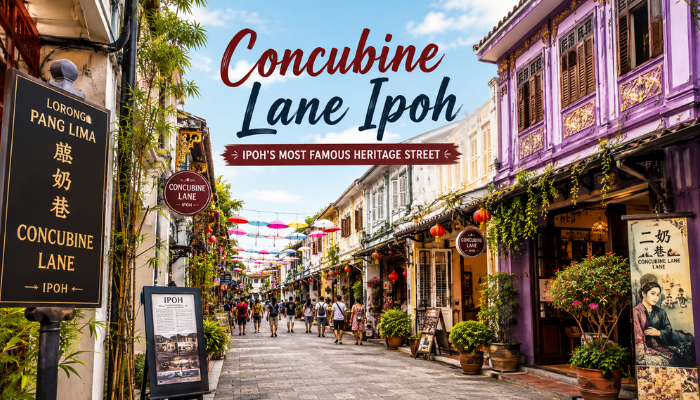
If you’re planning a visit to Malaysia, Concubine Lane Ipoh should be at the top of your travel itinerary. Located in the heart of Ipoh Old Town, this charming heritage street combines rich history, vibrant culture, delicious local food, colorful street art, and unique shopping experiences. Whether you’re a history enthusiast, foodie, photographer, or casual traveler, Concubine Lane offers something memorable around every corner.
Over the years, Concubine Lane has transformed from a quiet historical alley into one of Perak’s most popular tourist attractions. Today, visitors from around the world come to admire its beautifully restored colonial buildings, browse local handicrafts, sample authentic Malaysian delicacies, and immerse themselves in Ipoh’s fascinating heritage. This comprehensive guide explores everything you need to know about Concubine Lane Ipoh, from its captivating history to practical travel tips that will help you make the most of your visit.
The Fascinating History of Concubine Lane Ipoh
Concubine Lane, locally known as Lorong Panglima, dates back to the late 19th century during Ipoh’s booming tin mining era. At the time, Ipoh experienced rapid economic growth as wealthy Chinese miners accumulated fortunes through the lucrative tin industry. According to local legends, affluent mining tycoons built luxurious homes along this lane for their mistresses or concubines, giving the street its famous nickname, “Concubine Lane.”
Although historians continue to debate the accuracy of these stories, the legend has become an essential part of the street’s identity. Visitors are often intrigued by the romantic yet mysterious tales associated with the area, making the destination even more appealing. Walking through Concubine Lane today feels like stepping back into a different era where colonial architecture, traditional shop houses, and historical charm coexist beautifully with modern businesses.
The restoration of Ipoh Old Town has helped preserve much of Concubine Lane’s original character. Heritage conservation initiatives have maintained the colorful facades, intricate wooden windows, and vintage architectural details that define the neighborhood. Instead of disappearing under urban development, the lane has become a shining example of how historical preservation can support tourism while celebrating local culture.
Today, Concubine Lane serves as more than just a historical landmark. It symbolizes Ipoh’s successful transformation into one of Malaysia’s leading heritage tourism destinations, attracting thousands of visitors every week who come to experience its unique blend of history and modern lifestyle.
Top Attractions and Things to Do at Concubine Lane Ipoh
One of the biggest reasons travelers love Concubine Lane Ipoh is the incredible variety of attractions packed into a relatively short street. Every few steps reveal hidden gems, from artistic murals and vintage decorations to quirky souvenir shops and charming cafés. The lively atmosphere makes exploring the lane enjoyable throughout the day.
Photography enthusiasts especially appreciate the street’s vibrant aesthetic. Colorful umbrellas hanging overhead, artistic wall murals, restored heritage buildings, and decorative storefronts provide endless opportunities for memorable travel photos. Many visitors spend hours simply wandering through the alley while discovering unique architectural details.
Shopping is another major highlight. Boutique stores sell handmade crafts, traditional Malaysian souvenirs, local snacks, artisan jewelry, fashionable accessories, vintage collectibles, and customized gifts. Unlike large shopping malls, every shop has its own personality, making browsing an enjoyable experience rather than just a shopping trip.
Families traveling with children will also find plenty to enjoy. Street performers occasionally entertain crowds during weekends, while seasonal festivals bring cultural performances, lantern displays, and festive decorations that create an unforgettable atmosphere. Whether you’re interested in history, culture, shopping, or photography, Concubine Lane offers a well-rounded experience suitable for visitors of all ages.
Food and Culinary Delights Around Concubine Lane Ipoh
No visit to Concubine Lane Ipoh would be complete without exploring its impressive food scene. Ipoh is famous throughout Malaysia for its exceptional cuisine, and the lane showcases many local favorites that appeal to both domestic and international tourists.
Street food vendors offer freshly prepared snacks such as grilled seafood, fried treats, colorful desserts, ice cream, local pastries, and refreshing beverages. One of the most popular attractions is enjoying traditional Malaysian desserts while strolling through the lively heritage street. The combination of delicious aromas and vibrant market energy creates an unforgettable culinary adventure.
Coffee lovers should not miss Ipoh’s legendary white coffee. Numerous cafés surrounding Concubine Lane serve authentic Ipoh White Coffee alongside homemade cakes and traditional breakfast dishes. Many cafés occupy beautifully restored heritage buildings, allowing visitors to enjoy both excellent coffee and historic ambiance simultaneously.
Beyond the lane itself, nearby restaurants serve renowned local specialties including bean sprout chicken, curry noodles, dim sum, satay, and various Chinese-Malaysian fusion dishes. Food enthusiasts often spend an entire afternoon exploring the neighborhood’s culinary offerings, making Concubine Lane an ideal destination for gastronomic tourism as well as cultural exploration.
Best Time to Visit Concubine Lane Ipoh and Essential Travel Tips
Timing can significantly enhance your experience at Concubine Lane Ipoh. The lane is generally busiest during weekends, school holidays, and public holidays when both local residents and international tourists gather to explore the attractions. Visitors who enjoy energetic crowds, festivals, and bustling markets may prefer these peak periods.
However, weekday mornings provide a quieter atmosphere, allowing travelers to appreciate the heritage architecture without heavy crowds. Early visits are also ideal for photography since natural lighting is softer and many popular photo spots remain uncrowded. Arriving before midday helps avoid Malaysia’s hottest afternoon temperatures, making walking much more comfortable.
Comfortable walking shoes are highly recommended because the surrounding Ipoh Old Town is best explored on foot. Carrying drinking water, sunscreen, sunglasses, and a portable umbrella can make your visit more enjoyable, especially during warmer months. Since many vendors accept both cash and digital payments, carrying a small amount of local currency remains a practical idea.
Visitors should also allocate enough time to explore nearby attractions beyond Concubine Lane itself. The surrounding heritage district includes beautiful colonial buildings, museums, temples, cafés, and street art that together create one of Malaysia’s most rewarding walking tours.
Nearby Attractions That Complement Your Concubine Lane Ipoh Experience
While Concubine Lane is undoubtedly one of Ipoh’s highlights, several nearby attractions deserve equal attention. Exploring these destinations together provides a richer understanding of the city’s heritage, architecture, and cultural diversity.
Just a short walk away, visitors can admire elegant colonial-era buildings that reflect British influence during the colonial period. Historical landmarks, charming town squares, traditional temples, and beautifully restored commercial buildings showcase Ipoh’s multicultural identity. Art lovers will appreciate the famous murals scattered throughout Ipoh Old Town, many of which have become iconic photo locations.
Museums in the surrounding area offer fascinating insights into Ipoh’s tin mining history, local traditions, and economic development. These attractions help visitors understand why Ipoh became one of Malaysia’s wealthiest cities during the late nineteenth and early twentieth centuries.
Nature enthusiasts can also extend their journey beyond the old town by visiting nearby limestone caves, scenic parks, and temple complexes nestled within dramatic limestone hills. Combining Concubine Lane with these natural attractions creates a well-balanced itinerary featuring history, culture, architecture, cuisine, and outdoor exploration.
Whether you’re spending a single afternoon or several days in Ipoh, the surrounding attractions significantly enrich the overall travel experience and showcase why the city continues to grow in popularity among domestic and international travelers alike.
Conclusion
Concubine Lane Ipoh perfectly captures the unique charm that has made Ipoh one of Malaysia’s most beloved heritage destinations. From its intriguing historical legends and beautifully preserved architecture to its vibrant street food, boutique shopping, and welcoming atmosphere, the lane offers an unforgettable experience for every type of traveler.
Whether you’re exploring its fascinating past, sampling authentic Malaysian cuisine, capturing stunning photographs, or simply enjoying a leisurely walk through Ipoh Old Town, Concubine Lane provides memories that last long after your visit ends. As heritage preservation continues to blend seamlessly with modern tourism, this iconic street remains a shining symbol of Ipoh’s rich cultural identity and enduring appeal.
Frequently Asked Questions (FAQs)
1. Why is it called Concubine Lane Ipoh?
The street is believed to have housed the mistresses of wealthy Chinese tin miners during Ipoh’s mining boom, although some historians consider this story part legend and part history.
2. Where is Concubine Lane located?
It is located in Ipoh Old Town, Perak, Malaysia, within walking distance of many heritage attractions.
3. Is there an entrance fee?
No. Visitors can explore Concubine Lane free of charge.
4. What is the best time to visit?
Morning or late afternoon on weekdays offers fewer crowds, while weekends provide a livelier atmosphere.
5. How much time should I spend there?
Most visitors spend between one and three hours exploring the lane, shopping, eating, and taking photos.
6. Is Concubine Lane suitable for families?
Yes. Families, couples, solo travelers, and groups can all enjoy the street’s attractions and food.
7. What food should I try?
Popular choices include Ipoh White Coffee, bean sprout chicken, local desserts, traditional pastries, and Malaysian street food.
8. Can I buy souvenirs?
Absolutely. The lane features numerous shops selling handmade crafts, local snacks, clothing, artwork, and unique souvenirs.
9. Is Concubine Lane accessible by public transport?
Yes. It is easily reached by taxi, ride-hailing services, or public transportation within Ipoh.
10. Are there attractions near Concubine Lane?
Yes. Nearby attractions include Ipoh Old Town, heritage buildings, museums, street murals, cafés, temples, and limestone cave attractions, making it easy to plan a full day of sightseeing.
About the Author